
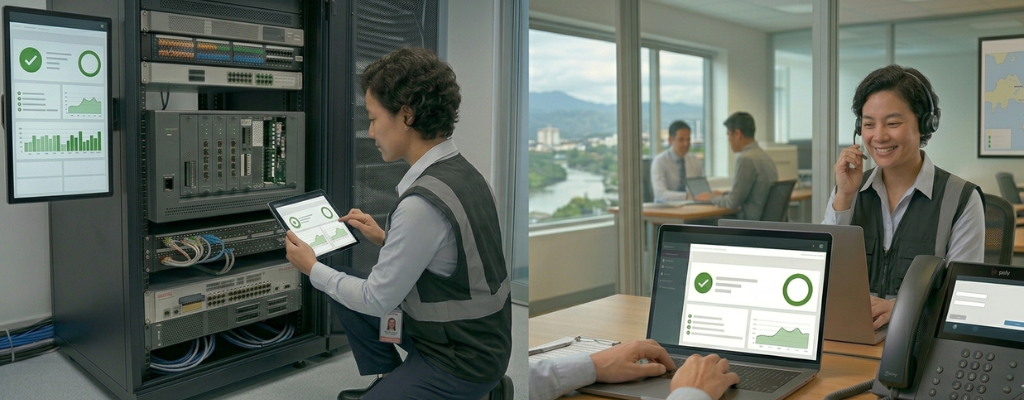
Setting Up an Avaya Phone System in a New Office | Avoid Call Drops & Registration Failures | Morgan Birgé - Copy
Setting Up an Avaya Phone System in a New Office: Avoid Call Drops and Registration Failures
Getting the Setup Right From Day One
Moving into a new office is the perfect opportunity to set up your Avaya phone system correctly, not just functionally, but properly. A rushed or incomplete setup doesn't just cause problems on day one. It creates issues that linger for months: calls that drop without explanation, phones that go offline randomly, and audio that works fine on some calls but not others.
Most of these problems are preventable. They come from a handful of setup mistakes that are easy to avoid when you know what to watch for.
Your Network Determines Everything
Before a single phone gets plugged in, the network has to be ready. An Avaya IP Office system runs entirely over your office network, and if that network isn't configured to handle voice traffic, no amount of phone system setup will fix it.
The two most important things to get right from the start:
Separate voice and data traffic: Voice calls and regular computer traffic should run on separate network paths. Keeping voice and data on separate VLANs is a recommended best practice for IP Office deployments; sharing a single network path for both creates congestion that degrades call quality and causes dropped calls.
Prioritize voice on the network: Avaya recommends configuring QoS settings so that voice packets are marked and prioritized over regular data traffic; without this, large file transfers or backup jobs running in the background can squeeze call quality in real time.
These aren't advanced configurations. They're baseline requirements for any Avaya IP Office installation to work reliably.
How Phones Find the System, And Why It Fails
When an Avaya IP phone powers on for the first time, it doesn't automatically know where the phone system is. It sends out a request to the network asking for instructions. Those instructions come from a service called DHCP, the same service that gives computers their network addresses.
Avaya IP phones require a custom DHCP option, either Option 176 or Option 242, to be configured on the network's DHCP server. This option tells the phone the IP address of the phone system, which port to use for communication, and where to download its firmware. Without it, the phone powers on, connects to the network, and then sits there waiting for instructions that never arrive.
This is one of the most common reasons phones fail to register in a new office setup. The network is working, the phone has power, but nobody configured the DHCP option that tells the phone where to go.
The PoE Power Problem Nobody Warns You About
Most Avaya desk phones don't use a separate power adapter; they draw power directly from the network cable. The network switch supplies that power through a feature called PoE (Power over Ethernet). When the switch doesn't supply enough power, phones behave erratically: slow to boot, prone to random restarts, or simply staying offline.
Every PoE switch has a total power budget, a maximum amount it can distribute across all connected devices. Here's what goes wrong in new offices:
A switch is purchased based on port count, not power capacity
Phones, wireless access points, and other PoE devices are all connected to the same switch
The switch runs out of power budget and starts rationing; the last devices connected get the least power
The fix is straightforward: verify the PoE switch's total power budget before the installation, and confirm it can support every device that will be connected to it. It's a 10-minute check that prevents weeks of unexplained phone problems.
SIP Trunks: Get the Carrier Involved Early
A SIP trunk is the connection between your Avaya system and your phone carrier; it's how calls travel in and out of the building over the internet. In a new office setup, SIP trunk configuration is one of the most common sources of early failures.
The settings that need to match between IP Office and your carrier include:
Authentication credentials: Username and password must match exactly what the carrier issued
Public IP address: IP Office must be configured to advertise the office's public-facing internet address, not the internal network address
Codec settings: The audio format that both sides agree to use must be compatible
SIP ALG: This feature on most routers interferes with SIP calls and should be disabled
Misconfigured SIP trunks are one of the most common causes of one-way audio and dropped calls. Verifying that registration intervals, timers, and codecs match the carrier's specifications, and confirming that NAT and firewall settings are correctly configured, resolves the majority of SIP trunk failures in new deployments.
The practical advice: contact your SIP trunk provider before the installation day and ask for their IP Office configuration checklist. Most carriers have one. Using it prevents the back-and-forth troubleshooting that often delays new office go-lives by days.
Registration Failures After Setup
If phones are online but won't register, showing "Discovering" or cycling through restarts, the cause is almost always one of three things:
Wrong DHCP options: The phone can't find the phone system because Option 242 wasn't configured
IP address conflict: Another device on the network has been accidentally assigned the same address as the phone system
Firewall blocking registration traffic: The firewall is treating SIP registration attempts as suspicious and silently dropping them
Firewall configuration is a commonly overlooked registration failure point. If phones lose registration intermittently rather than consistently, a NAT timeout on the firewall is often the cause, where the firewall closes the connection used by the phone to stay registered before the phone's keepalive signal renews it. Adjusting the keepalive interval or the firewall's session timeout for SIP traffic resolves this.
What a Proper New Office Checklist Looks Like
Before going live, every Avaya IP Office installation in a new office should verify:
Voice VLAN is configured and is separate from data traffic
QoS is enabled, and voice packets are prioritized
DHCP Option 242 is configured and pointing to the correct IP Office address
The PoE switch power budget is sufficient for all connected devices
SIP trunk credentials, public IP, and codec settings are confirmed with the carrier
SIP ALG is disabled on the router or firewall
All phones are registering and showing correct extension numbers
Test calls placed inbound, outbound, and between extensions
Skipping any of these steps doesn't always cause an immediate failure. Some of these gaps only surface under load, when multiple people are on calls at once, or when a routine network event triggers a registration failure that nobody expected.
Getting It Right the First Time Is Worth It
A correctly set up Avaya system in a new office runs quietly in the background and does exactly what it's supposed to do. A poorly set-up one becomes a persistent source of complaints, troubleshooting calls, and lost productivity.
The difference between the two is almost always preparation, not the equipment.
Need Help With Your Setup?
If you're setting up an Avaya system in a new office and want to make sure it's done right from day one, working with a qualified Avaya support provider makes the process faster and prevents the most common failures before they affect your team.

We Can Help
Call us at (312) 728-7652 or fill out the form below.
Featured Posts
Setting Up an Avaya Phone System in a New Office | Avoid Call Drops & Registration Failures | Morgan Birgé - Copy
Setting Up an Avaya Phone System in a New Office: Avoid Call Drops and Registration Failures
Getting the Setup Right From Day One
Moving into a new office is the perfect opportunity to set up your Avaya phone system correctly, not just functionally, but properly. A rushed or incomplete setup doesn't just cause problems on day one. It creates issues that linger for months: calls that drop without explanation, phones that go offline randomly, and audio that works fine on some calls but not others.
Most of these problems are preventable. They come from a handful of setup mistakes that are easy to avoid when you know what to watch for.
Your Network Determines Everything
Before a single phone gets plugged in, the network has to be ready. An Avaya IP Office system runs entirely over your office network, and if that network isn't configured to handle voice traffic, no amount of phone system setup will fix it.
The two most important things to get right from the start:
Separate voice and data traffic: Voice calls and regular computer traffic should run on separate network paths. Keeping voice and data on separate VLANs is a recommended best practice for IP Office deployments; sharing a single network path for both creates congestion that degrades call quality and causes dropped calls.
Prioritize voice on the network: Avaya recommends configuring QoS settings so that voice packets are marked and prioritized over regular data traffic; without this, large file transfers or backup jobs running in the background can squeeze call quality in real time.
These aren't advanced configurations. They're baseline requirements for any Avaya IP Office installation to work reliably.
How Phones Find the System, And Why It Fails
When an Avaya IP phone powers on for the first time, it doesn't automatically know where the phone system is. It sends out a request to the network asking for instructions. Those instructions come from a service called DHCP, the same service that gives computers their network addresses.
Avaya IP phones require a custom DHCP option, either Option 176 or Option 242, to be configured on the network's DHCP server. This option tells the phone the IP address of the phone system, which port to use for communication, and where to download its firmware. Without it, the phone powers on, connects to the network, and then sits there waiting for instructions that never arrive.
This is one of the most common reasons phones fail to register in a new office setup. The network is working, the phone has power, but nobody configured the DHCP option that tells the phone where to go.
The PoE Power Problem Nobody Warns You About
Most Avaya desk phones don't use a separate power adapter; they draw power directly from the network cable. The network switch supplies that power through a feature called PoE (Power over Ethernet). When the switch doesn't supply enough power, phones behave erratically: slow to boot, prone to random restarts, or simply staying offline.
Every PoE switch has a total power budget, a maximum amount it can distribute across all connected devices. Here's what goes wrong in new offices:
A switch is purchased based on port count, not power capacity
Phones, wireless access points, and other PoE devices are all connected to the same switch
The switch runs out of power budget and starts rationing; the last devices connected get the least power
The fix is straightforward: verify the PoE switch's total power budget before the installation, and confirm it can support every device that will be connected to it. It's a 10-minute check that prevents weeks of unexplained phone problems.
SIP Trunks: Get the Carrier Involved Early
A SIP trunk is the connection between your Avaya system and your phone carrier; it's how calls travel in and out of the building over the internet. In a new office setup, SIP trunk configuration is one of the most common sources of early failures.
The settings that need to match between IP Office and your carrier include:
Authentication credentials: Username and password must match exactly what the carrier issued
Public IP address: IP Office must be configured to advertise the office's public-facing internet address, not the internal network address
Codec settings: The audio format that both sides agree to use must be compatible
SIP ALG: This feature on most routers interferes with SIP calls and should be disabled
Misconfigured SIP trunks are one of the most common causes of one-way audio and dropped calls. Verifying that registration intervals, timers, and codecs match the carrier's specifications, and confirming that NAT and firewall settings are correctly configured, resolves the majority of SIP trunk failures in new deployments.
The practical advice: contact your SIP trunk provider before the installation day and ask for their IP Office configuration checklist. Most carriers have one. Using it prevents the back-and-forth troubleshooting that often delays new office go-lives by days.
Registration Failures After Setup
If phones are online but won't register, showing "Discovering" or cycling through restarts, the cause is almost always one of three things:
Wrong DHCP options: The phone can't find the phone system because Option 242 wasn't configured
IP address conflict: Another device on the network has been accidentally assigned the same address as the phone system
Firewall blocking registration traffic: The firewall is treating SIP registration attempts as suspicious and silently dropping them
Firewall configuration is a commonly overlooked registration failure point. If phones lose registration intermittently rather than consistently, a NAT timeout on the firewall is often the cause, where the firewall closes the connection used by the phone to stay registered before the phone's keepalive signal renews it. Adjusting the keepalive interval or the firewall's session timeout for SIP traffic resolves this.
What a Proper New Office Checklist Looks Like
Before going live, every Avaya IP Office installation in a new office should verify:
Voice VLAN is configured and is separate from data traffic
QoS is enabled, and voice packets are prioritized
DHCP Option 242 is configured and pointing to the correct IP Office address
The PoE switch power budget is sufficient for all connected devices
SIP trunk credentials, public IP, and codec settings are confirmed with the carrier
SIP ALG is disabled on the router or firewall
All phones are registering and showing correct extension numbers
Test calls placed inbound, outbound, and between extensions
Skipping any of these steps doesn't always cause an immediate failure. Some of these gaps only surface under load, when multiple people are on calls at once, or when a routine network event triggers a registration failure that nobody expected.
Getting It Right the First Time Is Worth It
A correctly set up Avaya system in a new office runs quietly in the background and does exactly what it's supposed to do. A poorly set-up one becomes a persistent source of complaints, troubleshooting calls, and lost productivity.
The difference between the two is almost always preparation, not the equipment.
Need Help With Your Setup?
If you're setting up an Avaya system in a new office and want to make sure it's done right from day one, working with a qualified Avaya support provider makes the process faster and prevents the most common failures before they affect your team.
Enroll in Our Email Course

Learn How a No-Nonsense IT Strategy Benefits Your Company:
Strategies to allocate your IT budget efficiently
Enhance cybersecurity defenses on a budget
Ensure your technology investments continue to serve your business as it grows
Let’s Take Your Business to the Next Level
Above all, we promise never to hit you with hidden fees. We won’t push the "newest, fanciest, coolest" tech trends just for the sake of it. We're here to deliver reliable, integrity-driven communication solutions that work better and more efficiently than what you may be managing in-house.
To find out if managed services is the right fit for your business, contact us for a free assessment.
77 W Washington ST STE, 1705 Chicago, IL 60602
Indiana Office
114 E Joliet St
Schererville, IN 46375
© 2026 Morgan Birgé. All Rights Reserved. Built With MSP Sites | Privacy Policy
